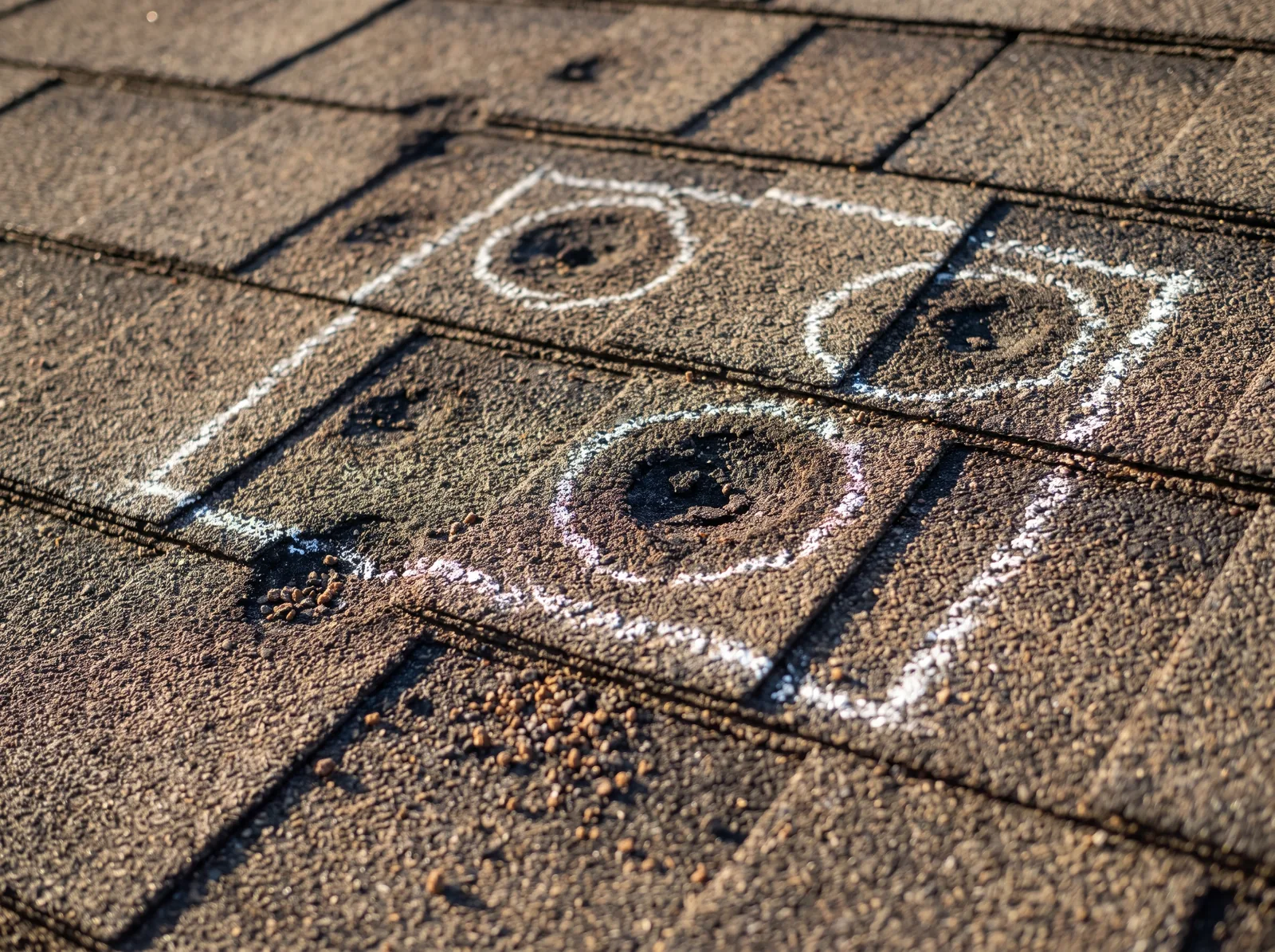
Oklahoma is a storm-chaser state — one of the reasons the legislature passed the Roofing Contractor Registration Act, the deductible law, and now the residential endorsement. After the May 2024 hail in Jenks and south Broken Arrow, and again after the May 2025 and 2026 storms, the door-knocking started within 24 hours. Most of it is harmless salesmanship. Some of it is how a homeowner ends up with a roof that leaks in a year, a contract they can't get out of, and a company whose phone is disconnected. Here's what to check.
1. Ask for the CIB registration number, then check it
Every roofing contractor in Oklahoma must be registered with the Construction Industries Board and must display the registration number on anything used to advertise or perform roofing work — the truck, the yard sign, the flyer, the estimate. No number, no roofer. With a number, look it up on the CIB's roofing registry: it shows whether the registration is active, whether the insurance is current, and whether there's a commercial endorsement. A registration issued last month, to a company with an address in another state, tells you what you need to know. From January 1, 2028, residential roofers will also need the Residential Roofing Endorsement — an exam and annual continuing education — and the endorsement will be on the registry too.
2. The deductible pitch is illegal
'We'll take care of your deductible.' 'Free roof — you pay nothing out of pocket.' 'We'll credit you a marketing fee for the yard sign.' All of it violates 59 O.S. §1151.30, which since November 2022 prohibits a roofer from advertising or promising to pay, waive or rebate any part of your deductible or compensating you for a 'service' as a workaround. Beyond the legality: your insurer can disregard that roofer's estimate entirely, your recoverable depreciation can be held until you prove you paid the deductible, and a roofer who's giving away $6,000 is taking it back out of your underlayment, your flashings and your ridge vent. A legitimate estimate in Oklahoma comes with a written notice of this rule; ours does.
3. Don't sign a contingency agreement on the doorstep
The form says: if your insurance approves the claim, you agree to hire us at the insurance price. It's presented as harmless — 'it just lets us talk to your adjuster.' It isn't. It locks you into a contractor you've known for ten minutes before you've seen a price, a shingle or a reference. You don't need to sign anything to get an inspection, a tarp or an estimate. If a roofer won't inspect without a signature, that's your answer.
4. Look at the truck, the address and the phone
Out-of-state plates and a magnetic sign aren't disqualifying — some good roofers travel — but combined with a 'local office' that's a UPS Store box, a website registered six weeks ago, and a phone number with an area code from a state that just had a hailstorm, they add up. A roofer who'll be here in three years has a 918 number, a physical presence, and reviews going back more than one storm season.
5. Check the insurance certificate, not the claim of one
Oklahoma requires $500,000 in general liability for residential roofing registration, and the CIB is the certificate holder — but a workers' comp policy isn't required for registration, and a crew member hurt on your roof without one becomes your problem. Ask for a certificate of insurance naming you, showing both general liability and workers' compensation, and call the agent on it. A real roofer sends it before the ladder goes up.
6. Compare the estimate line by line
Two estimates for 'a new roof' can be $5,000 apart and describe different roofs. Look for: tear-off and disposal, decking allowance per sheet, synthetic underlayment (not felt), ice-and-water in valleys and at penetrations, new drip edge, new pipe boots and flashings (not 'reuse existing'), the shingle brand and line (Class 4 or not), six nails per shingle, ridge vent, starter and cap, cleanup, manufacturer's warranty registration, and a workmanship warranty from a company that will exist to honor it.
7. Deposits, timing and the rest
A modest material deposit when the shingles are delivered is normal; a large deposit today for a roof 'sometime after the adjuster comes' is not. A crew that shows up the day after you sign, before the claim is approved, is a crew that needs to be paid and gone before questions come up. And a roofer who pressures you to file a claim for damage they 'found' without showing you photos is a roofer creating a claim, not documenting one — the CLUE report is yours, not theirs.
The ten questions
- What's your CIB registration number, and is it current?
- Can I have a certificate of insurance showing general liability and workers' comp?
- Do you require a contingency agreement or an assignment of benefits? (The answer should be no.)
- Will you give me the written deductible notice the law requires?
- Where's your office, and how long has this company operated under this name in Oklahoma?
- Can I have three references from this side of the metro from before the last storm?
- What shingle, what line, Class 4 or not, and who registers the warranty?
- Is ice-and-water, new flashing and a ridge vent in the price?
- Who's on the roof — your employees or a sub — and who's supervising?
- What's the workmanship warranty, in writing, and who do I call in year three?
We'll answer every one of those before you decide anything, and the inspection's free either way.
Related questions
Is it illegal for roofers to go door to door in Broken Arrow?
Door-to-door sales are regulated locally — many cities, Broken Arrow among them, require solicitors to hold a permit and honor no-soliciting signs — but a knock isn't itself illegal. What matters is what you sign. Ask for the registration number and take the flyer; don't sign the contingency form.
A roofer says my neighbor's roof was approved so mine will be too. True?
Hail is uneven, roofs differ in age and material, and every claim is adjusted separately. Get your own inspection with photos and hit counts before you file. A roofer who won't show you the damage on your roof is selling, not inspecting.
What if I already signed a contingency agreement?
Read it for a cancellation clause — many allow written cancellation within a few days, and Oklahoma's three-day right to cancel applies to many door-to-door sales over $25. Send written notice by a method you can prove. If they push back, the Oklahoma Attorney General's consumer protection unit handles roofing complaints.
Can I check a roofer's CIB registration myself?
Yes — the Construction Industries Board publishes a searchable roofing contractor registry at oklahoma.gov/cib. Search by company name or number; it shows status, insurance and endorsements.
Are all out-of-state roofers bad?
No. Some travel to storm areas and do good work, and Oklahoma lets nonresident roofers register. The registry, the insurance certificate, the references and the estimate tell you which is which — the license plate alone doesn't.
Do you knock on doors after a storm?
No. We inspect when you call, and the report is yours whether you hire us or not.